A few weeks ago my Nissan Qashqai started doing something I really did not want to see — coughing out thick black smoke and laying down a film of sooty residue around the exhaust tip. The car still drove, but the engine warning light came on, performance felt flat, and a quick OBD scan threw the usual diesel-misery codes related to airflow and combustion.
I took it to a local garage to ask about a clean-up. The quote came back at £150 just to clear the soot, on top of any actual repair work. That was when I decided to try one more DIY approach before handing over the cash — and the only thing it ended up costing me was a £16 bottle from Amazon. This post is the honest write-up of what I did, what worked, and why I think it worked — in case you are staring down the same problem on a 1.5 or 1.6 dCi Qashqai.
What was actually wrong with my Qashqai
The root cause in my case was a cracked turbo intake pipe — the rubber/plastic hose that runs from the intercooler into the turbo. It is a known weak point on Qashqai 1.5 dCi engines and a common cause of the dreaded P0299 (turbo underboost) code. Owners on the Qashqai Forums have been complaining about this exact split for years.
When that pipe leaks, the engine runs rich, combustion gets messy, and unburnt fuel turns into black soot that coats the inside of the exhaust, the EGR valve and eventually clogs the diesel particulate filter (DPF). Once I had a new intake pipe fitted, the leak was gone — but the soot was already in the system, and the EML stayed on.
What did NOT work
Before I found a fix that stuck, I burned through a small shelf of products. To save you time:
- Generic supermarket diesel injector cleaners — tipped them in, drove around, no real change.
- One famous-brand “system cleaner” — mild improvement on the first tank, then back to square one.
- Just driving it harder — Italian tune-up style, on the motorway, hoping a passive regen would sort the DPF. It improved smoke briefly but the warning light stayed on.
My takeaway: if there is real soot in the system, a thin additive on its own with rough city driving will not be enough. You need the right chemistry and the right driving conditions together.
The combination that finally worked
Here is what I did, end to end. The only thing I bought specifically for this fix was a £16 bottle of Wynn’s Formula Gold from Amazon — the diesel was just a normal fill-up I would have done anyway.
I ran the tank down low, then filled it about 70% with Costco premium diesel. Costco diesel in the UK is a good-quality fuel with a solid additive package, and going premium gives you extra cetane and detergents over standard pump diesel. That was the base I wanted before I added anything else.
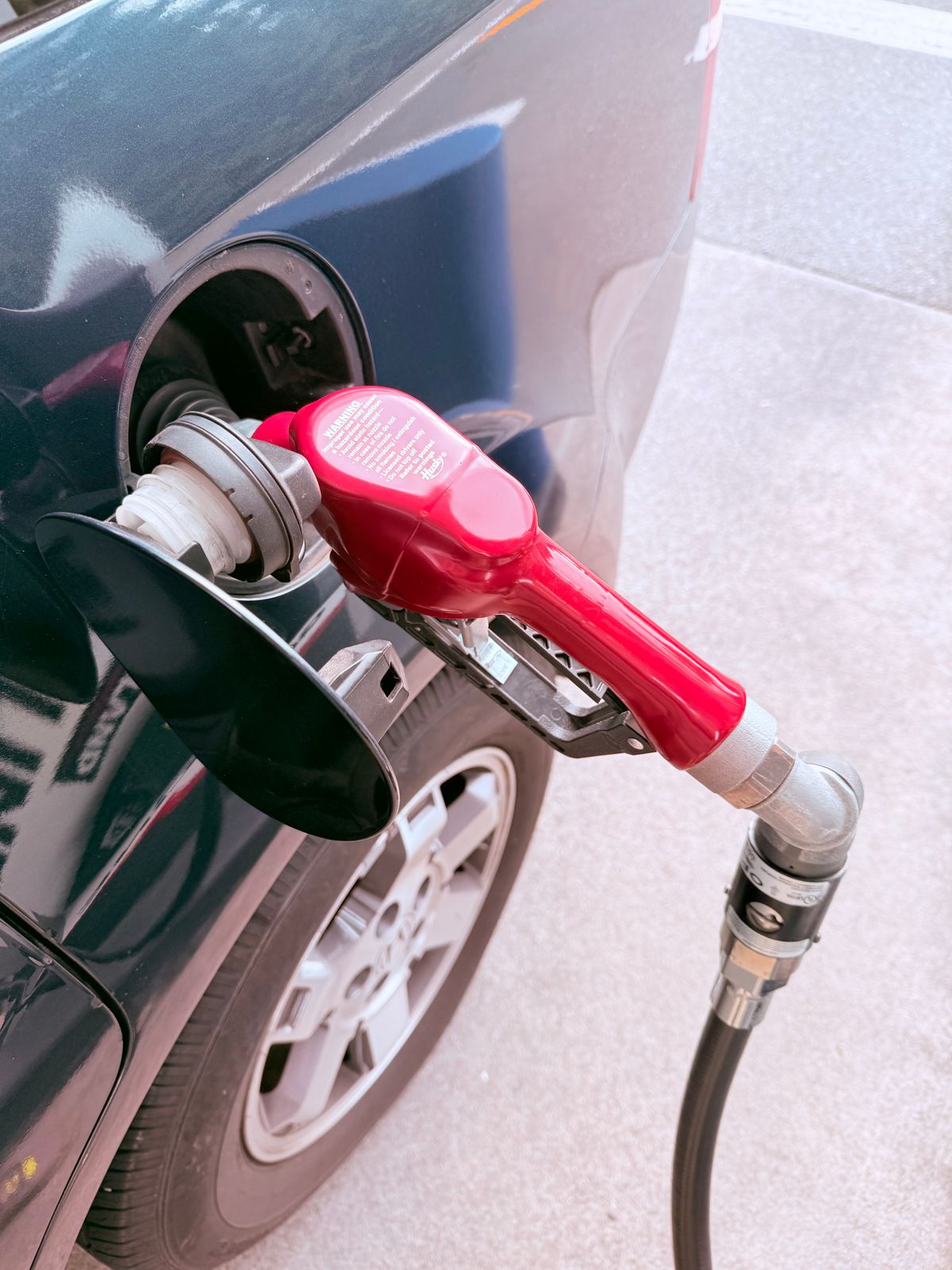
Photo on Pexels
2. Added a full bottle of Wynn’s Formula Gold
This was the bit that genuinely surprised me. I poured in a full 500ml bottle of Wynn’s Formula Gold High Performance Diesel System Treatment (product code 76401).
What makes this one different from the cheap injector cleaners is the chemistry. According to Wynn’s own product page, Formula Gold contains cerium, which acts as a combustion catalyst. In plain English: it helps the engine burn off existing soot in the exhaust at a lower temperature, and helps keep the EGR valve and DPF cleaner. One 500ml bottle treats up to 70 litres of diesel, which lined up perfectly with my fill-up.
3. Cleared the codes with my OBD2 scanner
Before driving, I plugged in my ANCEL AD310 OBD2 scanner, read the stored codes (so I had a record), then cleared them. The reason for clearing is simple — you want a clean slate so you can see whether the codes come back during the test drive.
The AD310 is a basic, no-nonsense reader. It will not do bi-directional tests or live ABS data, but for clearing engine codes and watching live engine data on a budget, it has been rock solid for me.
Photo by Andrea Piacquadio on Pexels
4. The 40-mile high-RPM run
This is the bit a lot of people skip, and I think it is the single most important step.
I took the car onto a clear stretch of dual carriageway and drove for 40 miles, holding the engine above 2500 RPM, mostly in 4th or 5th gear. The aim was to get the exhaust hot enough for long enough to trigger an active DPF regeneration while the Wynn’s additive was working through the combustion chamber, injectors and exhaust.
This matches the general advice you will read on diesel forums and from DPF repair specialists: short, low-RPM city journeys are exactly what causes soot build-up in the first place, so the fix has to look the opposite of that. After about 25 minutes of steady running you can usually feel the engine wake up — throttle response sharpens, smoke disappears, and the exhaust note cleans up.
The result
By the end of that drive my engine warning light was off, the smoke was gone, and the throttle felt the way it used to. I rescanned with the AD310 a few days later and no codes had come back. Several tanks on, the car is still running cleanly, and I am keeping a small bottle of Formula Gold in the boot for occasional top-ups.
So the maths in the end:
- Garage quote to remove soot: £150
- Wynn’s Formula Gold from Amazon: £16 (the Costco diesel was a normal fill-up — you have to fuel the car anyway)
What I would tell another Qashqai owner
A few honest things worth saying:
- Fix the underlying cause first. If you have a split intake pipe, a faulty MAF sensor, or a stuck EGR, no additive will save you. In my case the new intake pipe came first; the cleaning regime came after.
- Pick the right additive. Cerium-based products like Wynn’s Formula Gold are designed to help with soot and DPF cleanliness, which is a different job from a basic injector cleaner.
- Drive the car like you mean it — safely. Stick to motorway speed limits, but keep the revs up. Short urban journeys never let the DPF get hot enough to clean itself.
- Own a basic OBD2 scanner. Even a cheap unit like the ANCEL AD310 saves you money over time, just from being able to read and clear codes yourself before paying anyone for a diagnostic.
I am not a mechanic and your car may have a different underlying fault, so use this as a starting point rather than a guarantee. But if you are in the same situation I was — cleared the actual fault, just need to deal with leftover soot — this combination is the cheapest, simplest fix I have personally found.
Drive safe, and do not let a soot warning light scare you into a £150 bill before you have tried a £16 bottle and a long, fast drive.